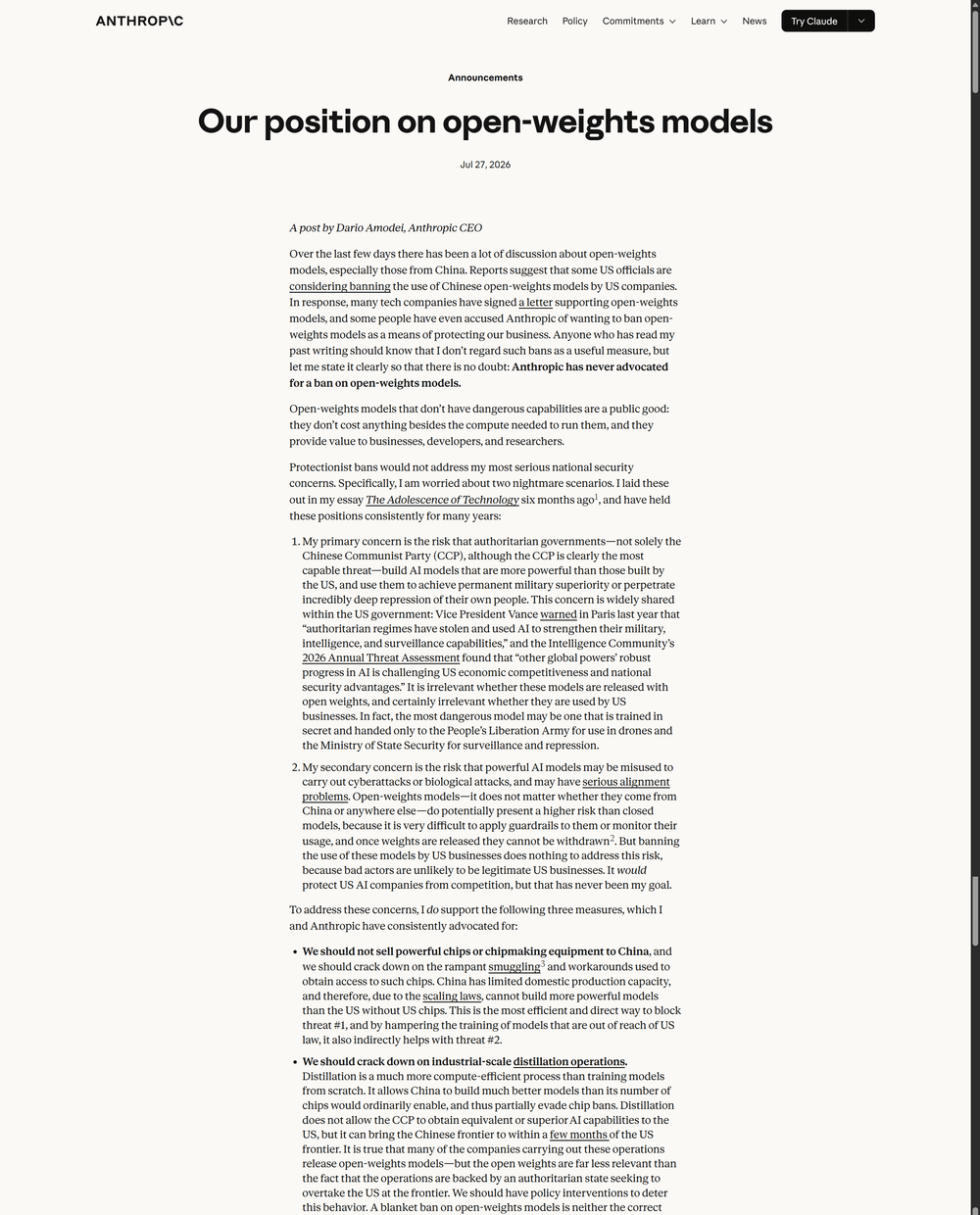
Anthropic CEO Dario Amodei said in a July 27 statement that his company had never advocated for a ban on open-weight models. He called open models without dangerous capabilities a public good, then argued that frontier systems require tighter controls.
WHAT ANTHROPIC PROPOSED
Amodei proposed three measures: tighter limits on advanced chips sent to China, action against industrial-scale distillation, and mandatory pre-release safety testing for sufficiently capable models, whether open or closed.
The statement said released weights are difficult to monitor or recall. It pointed to cyberattacks, biological misuse and alignment failures as risks that could grow with more capable systems.
WHAT THE LETTER SAID
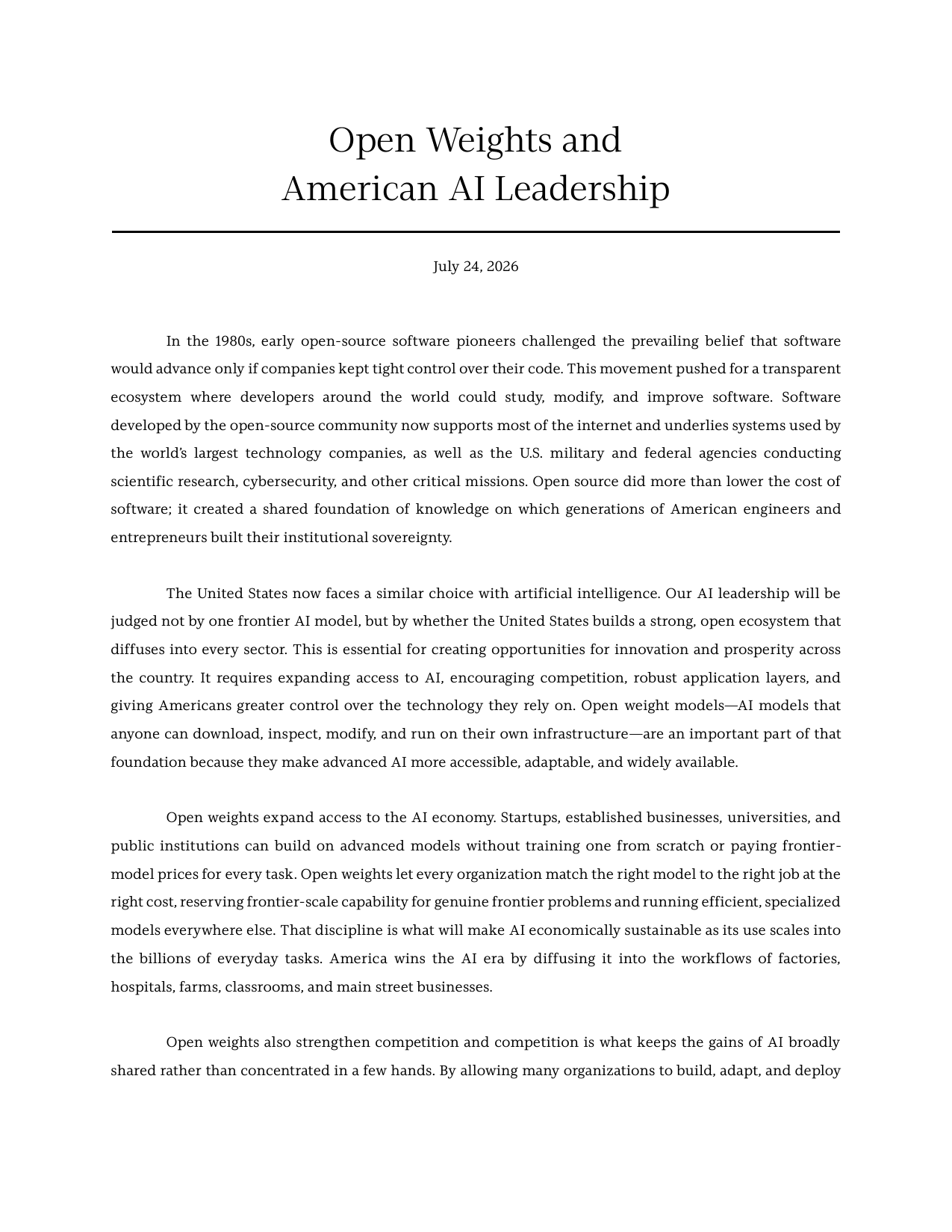
A July 24 industry letter signed by Nvidia and dozens of other organizations made a different case. It said open weights widen access, strengthen competition and give customers more control over the systems they use.
The letter acknowledged that released weights are hard to trace or reverse. It argued that broad access also lets more researchers find vulnerabilities and build defenses.
MY VIEW
Safety rules should reduce risk. They should not quietly become a moat.
Anthropic's distinction between a ban and targeted controls is real. But the practical effect matters more than the label. Expensive testing and restricted access to compute can fall hardest on smaller labs and open research groups. The companies best positioned to comply are often the companies that already dominate the market.
Closed models do not remove misuse, concentration or opacity. They move those risks behind corporate boundaries. A safer ecosystem needs public, independent and proportionate testing standards, not rules that turn a few vendors into permanent gatekeepers.